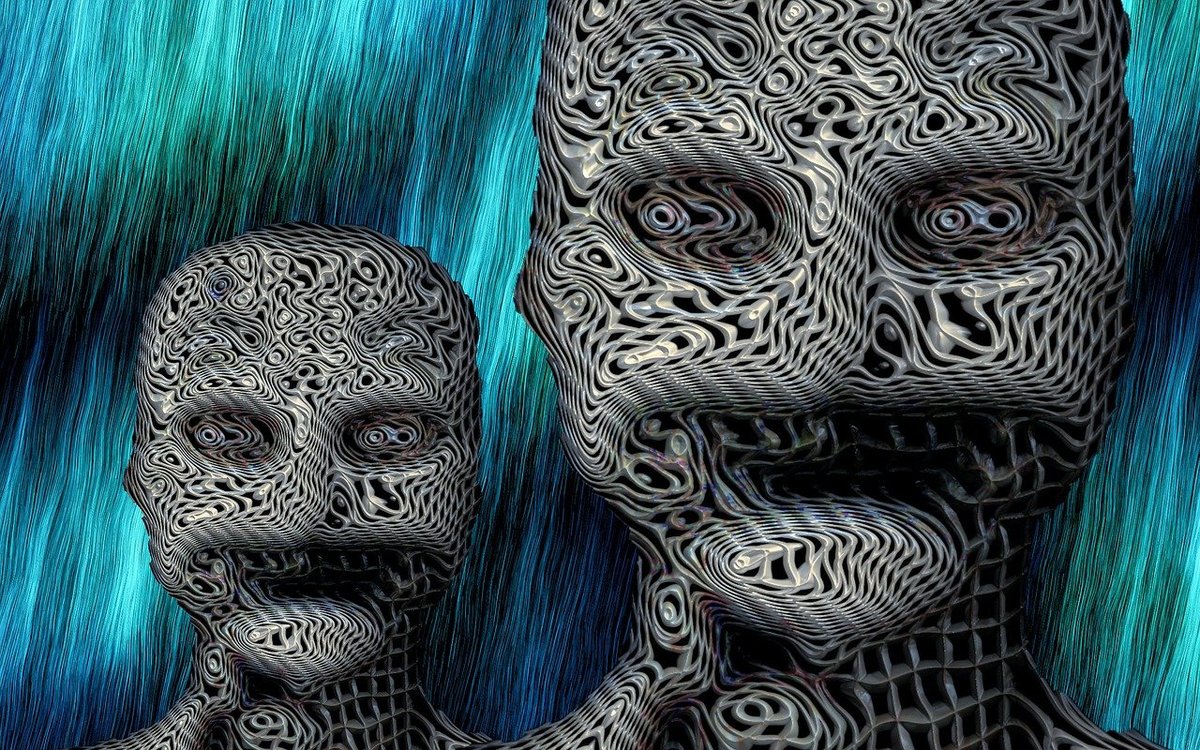
The cold, infinite void of space isn't just vast; it's terrifying. It's in this cosmic arena that the deepest human anxieties meet the ultimate unknown, giving birth to the potent genre we call sci-fi horror. At its core, the enduring power of these stories — from H.R. Giger's xenomorphs to the incomprehensible entities of Lovecraftian lore — doesn't spring from special effects or jump scares alone. It's rooted firmly in the Psychology of Fear and Panic in Alien Narratives, a masterclass in exploiting our most primal vulnerabilities.
As legendary director John Carpenter aptly put it, "Horror is a reaction, it's not a genre." And when that reaction is triggered by something utterly alien, it bypasses our rational defenses, burrowing deep into the subconscious to thrill, disturb, and ultimately, offer a catharsis for the terrors we face every day. Stephen King, another master of dread, suggests that "We make up horrors to help us cope with the real ones." In alien narratives, those made-up horrors become a profound mirror to our existential dread, societal anxieties, and the fragile nature of our existence.
At a Glance: Understanding Fear in Alien Narratives
- It's all about primal vulnerability: Alien threats tap into our most basic survival instincts and deep-seated fears.
- The unknown is king: What we don't understand, we fear most. Aliens embody this perfectly.
- Existential dread amplified: These stories often force us to question humanity's place, purpose, and insignificance.
- Relatable characters matter: We connect with protagonists who mirror our own flaws and fears, making their terror ours.
- Setting is a character: Isolated spaceships or hostile planets amplify feelings of helplessness and confinement.
- Cultural fears reflected: Alien invaders often symbolize real-world anxieties about technology, war, or societal change.
The Deep Roots of Dread: Unpacking Human Fear
Before we can effectively dissect how alien narratives exploit fear, we need a baseline understanding of what fear actually is. It's not a monolithic emotion, but a rich tapestry of reactions, each capable of being pulled and manipulated by a skilled storyteller.
The Spectrum of Human Fear
Think of fear as a dial with many settings. Alien narratives often crank several of these to eleven:
- Primal Fear: This is the most basic, hardwired survival instinct. The sudden appearance of a predatory alien, a pursuit through claustrophobic corridors – these scenarios trigger the raw fight-or-flight response, bypassing all rational thought. It's the fear of being hunted, of pain, of immediate bodily harm.
- Existential Fear: This is where alien narratives truly shine. It's the profound unease of questioning one's place in the universe, the fragility of human existence, and the potential loss of identity or sanity when confronted with something utterly beyond comprehension. Isolation in deep space, the realization of humanity's insignificance, or a species facing extinction – these are hallmarks of existential terror.
- Fear of the Unknown: Perhaps the most potent weapon in the alien horror arsenal. Ambiguous threats, incomprehensible motives, entities that defy our understanding of biology or physics. As Neil Gaiman often demonstrates, leaving things unexplained allows the reader's imagination to fill in the blanks, often with something far more terrifying than anything explicitly described. H.P. Lovecraft built an entire mythology on this principle, presenting "cosmic horrors" so vast and indifferent they shattered the human mind.
- Fear of Death & Loss: The ultimate cessation, the end of everything. Alien narratives frequently present scenarios where death is not just possible, but gruesome, inevitable, or even a transformation into something worse. The potential loss of loved ones, of freedom, or even the loss of what it means to be human (e.g., assimilation, body snatching) are powerful drivers of panic.
- Social Fear: While less central to direct alien encounters, social anxieties can be cleverly woven in. Think of the distrust among a small crew confined on a spaceship, wondering who among them might be compromised or secretly working against the group. The fear of isolation, of being ostracized, or of failing to protect one's community can be amplified when an alien threat is present.
The Brain's Role in a Panic Attack
When you face a perceived threat, your brain's amygdala acts as an alarm bell, triggering an immediate, visceral "fight-or-flight" response. Adrenaline floods your system, heart rate spikes, senses sharpen – all in milliseconds. This is the physiological engine of panic.
Psychological theories help us understand why we experience fear:
- James-Lange Theory: Suggests that our physiological responses (like a racing heart) precede and cause our emotional experience of fear. An alien appearing, your heart pounds, then you feel afraid.
- Cannon-Bard Theory: Argues that emotions and physiological responses happen simultaneously but independently. You see the alien, and at the same time your heart races and you feel fear.
- Cognitive Appraisal Theory: This one is crucial for nuanced storytelling. It posits that fear results from an individual's interpretation of a situation. The same alien might induce mild curiosity in one character but paralyzing terror in another, depending on their past experiences, beliefs, and appraisal of the threat.
For writers, understanding these mechanisms means knowing how to trigger both the immediate, physical fears (visceral responses to tangible threats) and the more insidious, psychological fears (internal anxieties and emotional responses that create lasting unease and dread long after the immediate danger has passed).
Crafting Cosmic Terror: How Alien Narratives Build Fear
So, how do writers and filmmakers actually translate these psychological principles into stories that make our skin crawl? It's a careful dance of suspense, atmosphere, and a deep understanding of human vulnerability.
The Art of Building Suspense: The Anticipation of the Alien
Suspense is the lingering sense of dread that something might happen. In alien narratives, it's the slow, creeping realization that you're not alone, that something is out there, beyond the hull of your ship or the walls of your remote outpost.
- Subtle Hints & Foreshadowing: A flicker on a radar screen, an unexplained signal, a faint scraping sound from the ventilation system, a crew member acting strangely. These tiny breadcrumbs, like those masterfully scattered by Stephen King, tell us trouble is coming without showing it directly.
- Withholding Information: What is that thing? Where did it come from? What does it want? Not giving the audience all the answers immediately creates an agonizing tension. The mind naturally tries to fill the void, and our imaginations are often far more terrifying than any explicit reveal.
- Strategic Pacing: This is the heartbeat of horror. Slow, deliberate scenes build palpable tension, making you dread every creak and shadow. Then, sudden, rapid pacing explodes into shock and immediate fear – a burst of alien violence, a terrifying chase. The interplay between these rhythms keeps the audience on edge, ensuring they are mentally exhausted but emotionally gripped.
- Cliffhangers & Escalating Stakes: Every close call, every narrow escape, ratchets up the tension. The stakes are never just personal; they often involve the fate of a crew, a colony, or even humanity itself.
Embracing the Unknown: The Unfathomable Alien
As we've established, the fear of the unknown is a superpower in alien horror. When the antagonist is truly alien, it defies our frames of reference, our biology, our very understanding of life.
- Vast, Incomprehensible Horrors: H.P. Lovecraft made a career out of this, presenting entities whose very existence challenges human sanity. His "cosmicism" posits a universe indifferent to humanity, populated by beings so ancient and powerful that merely glimpsing them is enough to break a mind. Alien narratives that lean into this vastness, like 2001: A Space Odyssey or Arrival, evoke a sense of awe mixed with profound dread.
- The Uncanny Valley: This theory describes our discomfort with entities that are almost human, but not quite. In alien design, this can be exploited to create beings that are disturbingly familiar yet horrifyingly wrong – a humanoid shape with too many limbs, an unnerving gait, or eyes that reflect no human empathy. The classic grey alien, with its oversized head and black eyes, often skirts this boundary.
Relatable Human Vulnerability: Us Against Them
No matter how terrifying the alien, the story only resonates if we care about the humans facing it. Relatable, vulnerable, and flawed characters are our entry point into the narrative's terror.
- Mirroring Audience Fears: When characters grapple with isolation, doubt, or the loss of control – fears we all share – their experiences become intensely personal. If a character fears being abandoned in space, and you’ve ever felt lonely or helpless, you instantly connect.
- Growth Through Confrontation: Characters who confront their fears, even if they don't overcome the alien threat, can undergo significant personal growth. Their journey to resist, understand, or simply survive against an overwhelming force can be transformative, making their struggle all the more compelling. Think of Ripley in Alien, evolving from a cautious warrant officer to a hardened survivor.
Engaging the Senses: Immersive Alien Worlds
To truly pull readers into an alien nightmare, writers must engage all five senses. It's not just about what you see; it's about what you hear, smell, and even feel.
- Sight: The grotesque design of an alien creature, the oppressive darkness of a derelict ship, the unsettling architecture of an alien world.
- Sound: The ominous silence of deep space, the metallic clang of an unseen presence, the chitinous skittering of an alien predator, the guttural roar that is utterly unlike any earthly sound.
- Smell & Touch: The acrid stench of alien ichor, the cold, clammy touch of an extraterrestrial surface, the feeling of claustrophobia in a cramped escape pod. These details create a visceral, lived experience that blurs the line between fiction and reality.
The Antagonist: The Alien Itself
The alien antagonist is the focal point of fear, embodying the primal terrors we've discussed. But a truly terrifying alien is more than just a monster; it's a concept.
- Embodying Primal Fears: Is it a predator (primal fear)? A hive mind that steals individuality (existential fear)? A virus that transforms (fear of loss of identity)? A skilled writer ensures the alien isn't just scary but represents a deeper human anxiety.
- Clear (or Unclear) Motivations: Sometimes, the alien's clear, terrifying goal (e.g., reproduction at all costs, like the Xenomorph) makes it relentlessly effective. Other times, the lack of comprehensible motivation, an alien being that operates on principles entirely foreign to us, is what makes it so unnerving.
Plot Structure and Pacing: The Rhythm of Terror
A well-orchestrated alien narrative balances the slow burn of psychological dread with sudden bursts of shocking violence.
- Slow-Building Tension: Many of the best alien stories begin with a creeping sense of unease. Think of the initial discoveries in Alien or the subtle changes in the crew of Event Horizon. This allows fear to fester and grow, priming the audience for later shocks.
- Sudden Shocks: These are the payoff for the slow build. The unexpected attack, the terrifying reveal, the sudden death. These moments are amplified when the preceding tension has been expertly managed.
- Climax and Lingering Unease: The narrative builds to a peak of fear, a confrontation with the alien threat that feels insurmountable. But unlike traditional action, sci-fi horror often avoids neat resolutions. Instead, it can leave a lingering sense of unease, suggesting the threat isn't truly gone, or that the experience has fundamentally changed the survivors. Even after the monster is defeated, the psychological scars remain.
The Setting as a Character: Isolation in the Void
The environment in which alien encounters unfold is rarely just a backdrop; it actively amplifies fear.
- Isolation and Confinement: Nothing exacerbates fear like being trapped. A derelict spaceship in the vastness of space, a research station on a distant, hostile planet, a claustrophobic escape pod – these settings inherently strip away safety and create a sense of utter helplessness. There's no help coming, no escape. Just you and the alien. This echoes Stephen King's use of isolated settings like the Overlook Hotel to amplify internal terrors.
- Hostile Environments: Beyond isolation, the alien environment itself can be a threat. Toxic atmospheres, extreme temperatures, impossible gravitational forces – these constant dangers add layers to the primary alien threat, making survival a multi-faceted challenge.
- Symbolic Settings: A decaying alien ship can symbolize the hubris of exploration or the fleeting nature of life. A pristine, unblemished alien world can represent the terrifying indifference of the cosmos.
Cultural Echoes: Alien Fears as Societal Mirrors
Alien narratives don't exist in a vacuum. They are deeply intertwined with our collective anxieties, moral values, and taboos, offering a powerful lens through which to confront real-world issues.
- Reflecting Collective Anxieties: During the Cold War, fears of nuclear annihilation and communist invasion manifested in creature features like 1954's Godzilla, which symbolized the terrifying power of atomic weapons. Today, fears of climate change, technological surveillance, AI taking over, or even global pandemics are increasingly being projected onto alien threats. Think of shows like Black Mirror, which often explore the alienating aspects of technology.
- Moral Values and Taboos: Alien stories can challenge our ethical boundaries. How far would we go to survive? What defines humanity? Is xenophobia a justifiable reaction to an alien threat, or a dangerous flaw? These narratives force us to confront uncomfortable questions.
- Evolving Fears: Just as societal fears shift, so too do the aliens that embody them. Early aliens were often simple invaders; later, they became more complex, mirroring fears of genetic manipulation, biological warfare, or existential cosmic insignificance.
- Cultural Differences: Western narratives often focus on individualism, the survival of the self, and existential threats to humanity's dominance. Eastern cultures, particularly Japanese horror (e.g., Ringu), might emphasize collective fears related to family, societal shame, or supernatural elements that blur the lines of reality. An alien threat in a Japanese context might target family lines or spiritual purity, rather than just physical bodies.
Consider the narrative of the 'Chicken Little Alien', a story that in some iterations, plays on our fears of environmental collapse and our own destructive tendencies, reflecting them back as an external, alien consequence. Explore the Chicken Little Alien story to see how such narratives can internalize our anxieties about our planet's future.
Beyond the Scream: Actionable Insights for Storytellers
So, you want to craft an alien narrative that truly terrifies? Here's how to apply the psychology of fear and panic:
- Tap into Universal Psychological Triggers: Don't just invent a monster; understand what it represents. Is it the fear of the unknown, the terror of isolation, the loss of control, or the existential dread of insignificance? The most effective alien narratives leverage these universal human anxieties.
- Anchor Fear in Relatable Themes: Connect your alien threat to current events or pervasive psychological anxieties. An alien virus can become a metaphor for a pandemic. An alien intelligence that manipulates us plays into fears of technological control or misinformation. This resonance makes the horror feel immediate and relevant to your audience's own world.
- Master Suspense and Psychological Manipulation: The monster itself is only part of the equation. Use subtle hints, strategic pacing, and unanswered questions to build a pervasive sense of dread. Don't show everything at once. Allow the audience's mind to do some of the heavy lifting. Psychological manipulation, where characters doubt their perceptions or sanity, can be far more terrifying than any physical threat.
- Craft Authentic, Fear-Based Characters: Your characters are the audience's emotional conduit. Give them relatable backstories, internal struggles, and flaws that make them vulnerable. Show their fear, their panic, their moments of bravery, and their moments of despair. By understanding the psychology of fear yourself, you can write characters who react authentically to extreme pressure, making their terror contagious.
- Leverage Setting and Atmosphere as Characters: The alien environment should be an active participant in your story, not just a backdrop. Use isolation, confinement, and hostile conditions to amplify helplessness. Engage all senses to immerse your audience in the terrifying reality you've created.
- Don't Underestimate Lingering Unease: A truly terrifying alien story doesn't always end with a neat, happy resolution. Often, the most powerful impact comes from a lingering sense of unease, a psychological scar left on the characters (and the audience) that suggests the universe is still vast, uncaring, and full of unimaginable horrors.
By meticulously understanding and applying the psychology of fear and panic, you can move beyond simple jump scares to create alien narratives that don't just frighten, but profoundly disturb, challenge, and resonate long after the final page is turned or the credits roll. It's about tapping into the deepest, darkest corners of the human psyche and reflecting them back with an extraterrestrial twist.