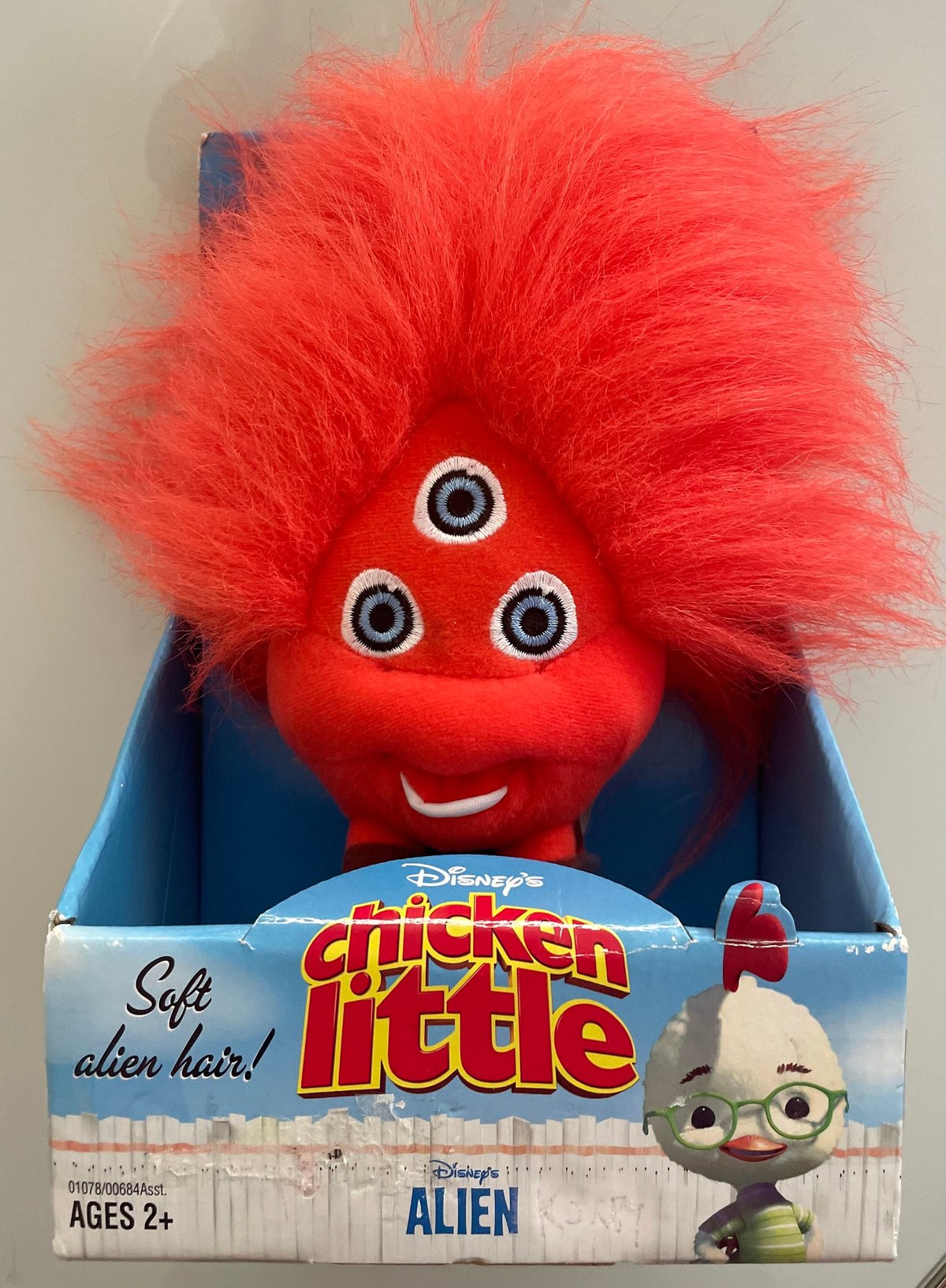
The sky is falling! Or, is it? For anyone who's ever revisited Disney's Chicken Little, the true source of that famous panic isn't just a falling acorn—it's a high-stakes, interstellar misunderstanding that forms the backbone of the film's climax. Diving deep into Disney's Chicken Little Alien Lore & Analysis reveals a surprisingly rich narrative layer, challenging conventional sci-fi tropes and delivering a poignant message about fear, family, and finding common ground.
Forget everything you thought you knew about alien invasions. Chicken Little doesn't give us menacing invaders from Mars; instead, it offers a heartwarming, if initially terrifying, tale of parental love and innocent mishap. We’re about to unpack every facet of these memorable visitors, from their technology to their true intentions, and what their presence truly means for the story.
At a Glance: What You'll Learn About Chicken Little's Aliens
- Not Villains, But Parents: The aliens aren't here to conquer Earth; they're desperately searching for their lost child.
- Advanced, Misunderstood Technology: Their ship and gadgets appear threatening but are merely functional tools.
- A Family Unit: The core alien characters—Gooby and his parents—mirror human family dynamics.
- The Real "Sky Falling" Moment: Their acorn-shaped ship's cloaking panel is the literal source of Chicken Little's panic.
- The Power of Miscommunication: Much of the film's conflict stems from Earthlings misinterpreting alien actions and vice-versa.
- A Subverted Trope: The movie cleverly flips the classic alien invasion narrative on its head.
The Day the Sky Truly Fell: Setting the Scene for Alien Arrival
Imagine waking up to find a piece of the sky has literally fallen on your head. That's Chicken Little's initial, much-maligned predicament, which quickly devolves into him becoming the laughingstock of Oakey Oaks. But what if his seemingly outlandish claim wasn't just a figment of a highly imaginative (and anxious) chicken's mind? What if a small, hexagonal panel, perfectly shaped like an acorn, genuinely did fall from the heavens, momentarily disrupting his world?
This is where the true story of Chicken Little begins to intersect with its most fantastical element: the aliens. Disney sets up a brilliant narrative bait-and-switch. We're led to believe Chicken Little is simply prone to exaggeration, only for the film to reveal that his "sky falling" incident was indeed a real event, albeit one with a very different, extraterrestrial explanation. The panel he encounters isn't from the sky at all, but a piece of an advanced alien spacecraft's cloaking mechanism. It’s a masterful setup, turning a simple cry-wolf tale into an unexpected sci-fi adventure, driven by a cosmic case of mistaken identity and parental devotion.
Decoding the Okey-Dokey Aliens: Who Are They, Really?
When you first see the aliens in Chicken Little, they're shrouded in menacing shadows and accompanied by ominous sound effects. It's a classic cinematic trick designed to trigger our innate fear of the unknown. But as the story unfolds, we discover these aren't the typical bug-eyed monsters or laser-wielding conquerors Hollywood often portrays.
Beyond the "Invaders": Unpacking Their True Nature
The Okey-Dokey aliens, as they are informally known (due to their only discernible word, "Okey-dokey!"), are fundamentally benevolent. Their presence on Earth isn't hostile; it's born out of desperation and love. Their entire "invasion" is a frantic, intergalactic search and rescue mission for their lost child, Kirby. This immediate subversion of the alien invasion trope is crucial to understanding their lore. They represent the ultimate outsiders, initially perceived as a threat, but ultimately revealed as a vulnerable, relatable family. Their actions, which appear destructive and terrifying to the residents of Oakey Oaks, are merely their attempts to locate and retrieve Kirby, complicated by a severe communication barrier.
The Curious Case of Kirby
At the heart of the alien narrative is Kirby, the adorable, single-eyed alien toddler. Kirby isn't just an alien; he is the reason for everything that happens after Chicken Little's initial panic. He is the catalyst, the lost child who accidentally falls out of his parents' spacecraft, leaving behind the cloaking panel that hits Chicken Little. His innocence and small stature make him an immediately sympathetic figure, and his attachment to Chicken Little, Fish Out of Water, and Abby Mallard humanizes the alien presence significantly. Kirby's design—small, fuzzy, with one large, expressive eye—emphasizes his non-threatening nature, even as his parents' more imposing forms cause widespread panic. He acts as the ultimate bridge between the two species, demonstrating that curiosity and affection can transcend vast differences.
Gooby and His Parents: A Family Afloat in Space
The alien parents, sometimes referred to as Melvin and Tina by fans, though not explicitly named in the film, embody universal parental anxiety. Their immense spacecraft, advanced technology, and powerful beams are not weapons of war but instruments of protection and search. The father is generally larger and more imposing, while the mother appears slightly smaller but equally determined. Their combined focus is singular: find Kirby.
Their interaction with Chicken Little and his friends is a study in escalating misunderstandings. The parents' attempts to retrieve Kirby, often involving powerful tractor beams or cloaking technology, are misinterpreted by the Earth inhabitants as aggressive acts. You see their desperation, their love, and their eventual relief when Kirby is safely back in their arms. The "Gooby" is their affectionate term for Kirby, showcasing a familial warmth that completely dismantles any initial perception of them as villains. This core family unit mirrors the emotional struggles and triumphs of Chicken Little and his own father, Buck Cluck, underscoring a universal theme of parental responsibility and unconditional love.
Appearance and Abilities: Cloaking, Communication, and More
Visually, the Okey-Dokey aliens are distinct. They are roughly pear-shaped, with a single large eye dominating their head, small nubs for limbs, and a slightly slimy, iridescent texture that hints at their extraterrestrial biology. Their bodies are covered in a short, purple fur, which again softens their appearance despite their initial frightening introduction.
Their technological prowess is remarkable:
- Cloaking Devices: The hexagonal panel that strikes Chicken Little is part of their ship's highly effective cloaking system, capable of rendering their massive vessel completely invisible to the naked eye. This technology is a prime example of how advanced their civilization is, yet how easily it can cause accidental chaos on a less technologically sophisticated planet.
- Tractor/Energy Beams: They employ powerful energy beams from their ship, which can lift and manipulate objects with ease. While this looks like an attack, it's their method for grabbing and moving Kirby or anything else in their path.
- Universal Translators (Eventually): Their primary linguistic communication is limited to "Okey-dokey!" However, once an alien translator device is introduced, it quickly bridges the language gap, proving that understanding is only a technological barrier away. This device becomes crucial for resolving the conflict, allowing both species to finally communicate their true intentions and feelings.
Technology from Beyond: A Look at the Alien Craft and Devices
The aliens’ technology is a character in itself, shaping much of the film’s plot and the residents’ reactions. It’s powerful, elegant, and crucially, often misunderstood.
The Acorn-Shaped Ship: More Than Meets the Eye
The massive alien spacecraft is the silent behemoth hovering above Oakey Oaks. Its most defining feature, at least from Earth's perspective, is the hexagonal, "acorn-shaped" panel that occasionally detaches. This isn't a weapon or a part of an invasion plan; it's merely a piece of the ship's advanced, adaptive cloaking system. When Kirby accidentally falls out, this panel detaches, causing the infamous "sky is falling" incident.
The ship itself is sleek and metallic, capable of incredible speed and maneuverability. It can hover silently, project powerful beams, and house a vast, complex interior that serves as both a home and a search vessel for the alien family. The very design of its detachable panel, resembling an acorn, cleverly ties into the film’s initial premise, making Chicken Little’s seemingly impossible claim rooted in a technological reality.
Advanced Tools: Cloaking, Gravity Manipulation, and the Energy Orb
Beyond the ship itself, the aliens utilize several key pieces of technology:
- Personal Cloaking Fields: The aliens possess personal cloaking devices, allowing them to become invisible. This is seen when they first descend from their ship, adding to their mysterious and initially threatening aura.
- Gravity Manipulation: Their ability to lift and move objects, including entire buildings and the town's water tower, isn't just brute force; it's a precise application of anti-gravity or tractor beam technology. This looks like destructive power but is actually their way of carefully searching for Kirby without harming him.
- The Energy Orb/Cage: At one point, they use an energy field, appearing as a glowing orb, to contain Kirby and his new friends. Again, this appears to be a cage or prison, but for a lost alien child, it's a protective measure, ensuring Kirby doesn't wander off again while they figure out how to get him back on the ship. It's a prime example of how their "alien" logic, while well-intentioned, can be terrifying from a human perspective.
The Language Barrier and Communication Challenges
Perhaps the single biggest obstacle to understanding and resolution in Chicken Little is the language barrier. The aliens can only utter "Okey-dokey!" and a few other simple phrases, making it impossible for them to explain their situation or their benign intentions to the terrified residents of Oakey Oaks.
This fundamental lack of communication fuels the misunderstandings and panic. Earthlings project their fears and assumptions onto the aliens, interpreting every action—from the "acorn" falling to the energy beams—as hostile. The narrative uses this brilliantly to heighten tension and underscore the film's central message: fear often stems from a lack of understanding. The eventual introduction of a universal translator, enabling full dialogue, is the turning point, quickly resolving the conflict and revealing the truth behind the "invasion."
Misunderstandings, Mayhem, and Mirth: The Earth-Alien Encounter
The alien encounter in Chicken Little is a masterclass in escalating comedic chaos, born from a profound lack of communication and deeply ingrained assumptions about extraterrestrial life.
Panic in Oakey Oaks: Human Reactions to the Unknown
When the alien parents' ship finally becomes visible and their "search and rescue" operations begin, Oakey Oaks plunges into full-blown panic. The townsfolk, already scarred by Chicken Little's previous "sky is falling" fiasco, initially dismiss his warnings. But once the evidence is undeniable—buildings being lifted, glowing beams, and the mysterious, single-eyed creatures—their skepticism transforms into terror.
This mass hysteria is a commentary on human nature's tendency to fear the unknown and to jump to worst-case scenarios. The residents immediately assume an invasion, picturing malicious beings bent on destruction, simply because they are different. Their reactions are visceral and humorous, from scattering in fear to attempting comical, ill-fated defenses. This widespread panic serves to highlight Chicken Little's unique position as the only one who truly understands the situation, having actually met Kirby.
Chicken Little's Role: From Cry-Wolf to Hero
Chicken Little's journey is intrinsically linked to the aliens. He goes from being the town pariah, ridiculed for his "sky is falling" delusion, to the unlikely hero who holds the key to averting intergalactic war. His initial encounter with the hexagonal panel and subsequent interactions with Kirby give him privileged knowledge. He's the only one who knows the aliens are searching for their child, not invading.
This transformation is powerful. It allows him to finally gain the respect and belief of his father and the town. His courage isn't about fighting the aliens, but about advocating for understanding, literally standing between two species to bridge a seemingly insurmountable gap. He uses his newfound credibility and his unique bond with Kirby to de-escalate the situation, proving that empathy and connection can be more potent than fear and aggression.
The Chase and The Climax: A Race Against Time and Fear
The climax of the film sees the alien parents, desperate to retrieve Kirby, engaged in a chaotic pursuit through Oakey Oaks. This sequence is a blend of slapstick comedy, heartfelt emotion, and genuine tension. Buildings are moved, citizens are narrowly missed, and the entire town is thrown into disarray as Chicken Little, his friends, and Kirby try to reunite the alien child with his family.
The chase sequence, with its dazzling display of alien technology and the sheer scale of the ship's movements, is designed to appear destructive. Yet, the aliens are always careful not to harm anyone. Their focus remains squarely on Kirby. This cinematic spectacle underscores the misunderstanding: what looks like an attack is, in fact, a meticulous retrieval operation. The urgency of the situation, fueled by both the aliens' parental anxiety and the town's fear, pushes the narrative to a thrilling resolution where communication finally triumphs over chaos.
The Emotional Core: Love, Loss, and Redemption in Alien Form
Beyond the dazzling animation and comedic antics, the alien lore in Chicken Little carries a significant emotional weight, anchoring the fantastical premise in universal human experiences.
Parental Love Knows No Species
The most profound aspect of the alien narrative is its portrayal of parental love. The entire "invasion" is a direct manifestation of Melvin and Tina's desperate love for their lost son, Kirby. Their frantic search, their use of advanced technology, their seemingly menacing actions—all are driven by the primal urge to protect and retrieve their child. This resonates deeply with anyone who understands the fierce, unconditional bond between parent and child.
By showcasing this universal emotion through alien characters, Disney subtly reinforces the idea that fundamental feelings transcend species, culture, or even planetary origin. The aliens aren't just an external threat; they are a mirror reflecting the anxieties and devotion of parents everywhere, including Chicken Little's own father, Buck Cluck, who struggles with expressing his love and pride. This shared emotional ground ultimately enables a peaceful resolution, as the townspeople, especially Buck, recognize the aliens' true motivation.
Kirby's Innocence: A Bridge Between Worlds
Kirby, the lost alien child, serves as the ultimate symbol of innocence and connection. His playful nature and immediate bond with Chicken Little and his friends disarm the initial fear of the "invaders." He is pure, unadulterated curiosity and affection, completely unaware of the panic his accidental presence has caused.
Kirby's interaction with the Earth children demonstrates that prejudice is learned, not innate. The children see a playmate, not a monster. This innocence acts as a crucial bridge, allowing Chicken Little to understand the true nature of the alien presence and to convey it to the adults. Without Kirby, the aliens would likely remain a faceless, menacing force. With him, they become a family, vulnerable and loving, deserving of empathy. His single, large, expressive eye communicates emotion without words, making him relatable despite his alien form.
Beyond Villains: A Re-evaluation of Intent
The narrative of Chicken Little deliberately misleads the audience into perceiving the aliens as villains, only to meticulously dismantle that perception. Initially, their cloaked ship, powerful beams, and imposing presence suggest hostility. However, as the story unfolds, every seemingly destructive act is revealed to be a misguided attempt at communication or retrieval.
This re-evaluation of intent is central to the film's message. It encourages viewers to look beyond superficial appearances and initial fears, to seek understanding before judgment. The aliens are not evil; they are simply different and desperate. Their "redemption" isn't about transforming from bad to good, but about revealing their true, benevolent nature, challenging the preconceived notions that both the characters and the audience might hold about alien encounters.
Analyzing Disney's Message: Fear of the Other and Finding Common Ground
Chicken Little's alien lore isn't just a plot device; it's a carefully crafted narrative used to deliver profound messages about society, prejudice, and empathy.
A Parable for Understanding
At its core, the alien storyline functions as a modern-day parable. It takes the familiar "cry-wolf" trope and injects it with an unexpected twist, using an alien encounter to explore themes of belief, truth, and community. The film critiques the human tendency to quickly judge and fear that which is unfamiliar. The residents of Oakey Oaks, blinded by their initial assumptions and a fear of the unknown, project malice onto the aliens, nearly causing a catastrophic misunderstanding.
The resolution, brought about by Chicken Little's courage and the eventual communication breakthrough, champions the importance of empathy, open-mindedness, and looking beyond initial impressions. It's a reminder that often, the biggest threats aren't from external forces, but from our own internal biases and fears.
The "Alien Invasion" Trope Subverted
Chicken Little plays masterfully with the classic "alien invasion" trope, turning it completely on its head. Instead of an aggressive takeover, we get a lost child and anxious parents. The film leverages our cultural familiarity with alien invasion narratives – the menacing ships, the powerful beams, the widespread panic – only to reveal a heartwarming, rather than terrifying, truth.
This subversion is key to the film's originality. It challenges audiences to question their own assumptions about "the other." By portraying aliens as relatable, loving parents, the movie shifts the narrative from conflict to connection, from fear to understanding. It's a clever way to engage with a popular sci-fi concept while imbuing it with a distinctly Disney-esque message of family and acceptance.
Legacy and Impact: How These Aliens Shape the Story
The aliens in Chicken Little are far more than just a convenient plot twist; they are integral to Chicken Little's character arc and the overall thematic resonance of the film. Their arrival provides the definitive proof that Chicken Little wasn't always wrong, validating his earlier claims and allowing him to step into his own as a hero.
Furthermore, the alien encounter forces the entire town of Oakey Oaks, and especially Buck Cluck, to confront their own biases and learn the value of believing in others. The movie concludes with the town not just safe, but enlightened, having experienced an extraordinary event that taught them about tolerance and the complexities of communication. The legacy of these aliens isn't destruction or conquest, but a profound lesson in understanding and acceptance, forever changing the fabric of Oakey Oaks.
Common Questions About Chicken Little's Aliens
Sometimes, a quick answer is all you need. Here are some of the most frequently asked questions about the extraterrestrial visitors in Chicken Little.
Are the aliens from Chicken Little evil?
No, the aliens from Chicken Little are not evil. They are benevolent beings, specifically a family, who come to Earth solely to find their lost child, Kirby. Their actions, which appear destructive and threatening to the residents of Oakey Oaks, are merely frantic attempts to locate and retrieve their son, complicated by a severe communication barrier.
What is the name of the alien baby in Chicken Little?
The alien baby in Chicken Little is named Kirby. His parents affectionately call him "Gooby," which is the only word (besides "Okey-dokey!") that the alien parents utter until a translator is used.
What kind of technology do Chicken Little's aliens use?
The aliens use highly advanced technology, including a massive spacecraft with sophisticated cloaking capabilities, powerful tractor/energy beams for manipulating objects, and personal cloaking devices. They also possess a universal translator device, which eventually allows for communication with humans.
Why did the aliens come to Earth?
The aliens came to Earth because their child, Kirby, accidentally fell out of their spacecraft during a trip. Their entire presence on Earth is a desperate search and rescue mission to find and bring Kirby back home.
Did Chicken Little really save the world from aliens?
Yes, in a way. Chicken Little didn't save the world by fighting the aliens, but by understanding their true, non-hostile intentions and bridging the communication gap between them and the terrified town of Oakey Oaks. He helped to de-escalate what would otherwise have been a catastrophic misunderstanding, effectively saving the world from an imagined invasion and potential conflict.
Your Next Dive Into Oakey Oaks Lore
From the moment that hexagonal "acorn" panel struck Chicken Little's head, the film set us on a trajectory toward an unexpected interstellar adventure. The alien lore in Chicken Little offers so much more than a simple plot device; it's a testament to Disney's ability to weave profound messages into seemingly simple stories. It teaches us about the perils of judging others based on fear and the extraordinary power of empathy, even for those who are literally out of this world.
So, the next time you hear someone say "the sky is falling," remember the Okey-Dokey aliens. Remember Kirby, and the profound, universal love that brought an entire spaceship halfway across the galaxy for a single, small child. There's always more to learn and appreciate about this unique corner of Disney's animated universe. If you're eager to delve further into the world of these memorable extraterrestrial visitors, you can Explore Chicken Little Alien to uncover even more hidden gems and insights. After all, understanding is the first step to truly appreciating the magic.