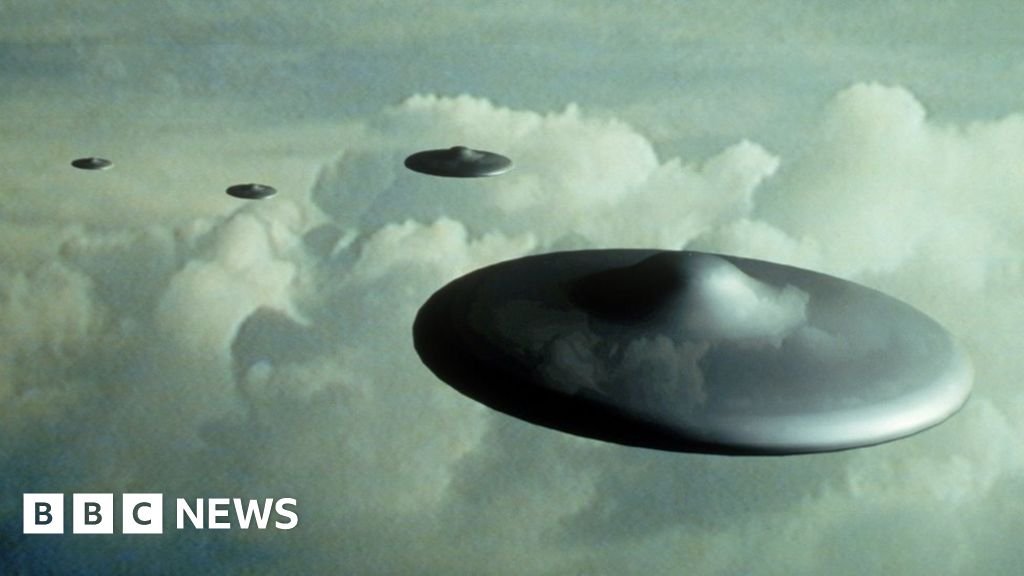
From ancient myths of celestial beings to modern tales of cosmic invasion, the human imagination has long grappled with the profound implications of life beyond Earth. When we undertake a Comparative Study of 'Sky is Falling' Alien Encounters, we're not just tracing science fiction tropes; we're exploring a deeply ingrained human anxiety—the fear of an external, incomprehensible force upending our world. These aren't just sightings; they are narratives of imminent peril, reflecting our deepest cultural hopes and, more often, our most profound fears.
At a Glance: Understanding Our Alien Anxieties
- Ancient Fears, Modern Forms: "Sky is falling" narratives about aliens aren't new; they're modern iterations of ancient anxieties about divine judgment or external threats.
- Cold War Catalysts: The mid-20th century saw a surge in alien invasion stories, deeply intertwined with fears of atomic war and hidden enemies (McCarthyism).
- Skepticism Meets Speculation: Scientific minds like Carl Sagan exemplify a framework that allows for speculative thought while demanding rigorous evidence for claims of alien visits.
- Beyond the Saucer: Modern interpretations of alien encounters extend beyond physical ships to psychological, existential, and even internal "alien" experiences.
- Cultural Mirrors: These narratives are less about actual aliens and more about us—our societal anxieties, technological progress, and our evolving relationship with the unknown.
- Critical Engagement: Understanding these encounters requires a blend of historical context, media literacy, and scientific skepticism to separate folklore from phenomena.
The Echo of "Falling Skies": A Timeless Human Fear
The idea that "the sky is falling" isn't exclusive to Chicken Little. Throughout history, humanity has looked to the heavens not just with wonder, but with apprehension. Whether it was comets foretelling doom, gods descending in chariots of fire, or today's flying saucers, the prospect of a cataclysmic intervention from above taps into a primal vulnerability. In the context of alien encounters, "sky is falling" refers to any narrative where extraterrestrial presence is perceived as an immediate, civilization-altering threat—an invasion, a plague, or a complete existential undoing.
Before "flying saucers" became a household term in the mid-20th century, ideas of life beyond Earth were already swirling. Think of the romanticized canals on Mars or the long-held belief in lunar civilizations. These concepts laid the groundwork, making the leap to extraterrestrial visitors less a sudden shock and more an evolution of existing cosmic curiosity. The question wasn't if there was life out there, but what kind—and what it might want from us.
The Mid-20th Century's Anxious Skies: Cold War Fears and Flying Saucers
The post-World War II era ignited an unprecedented cultural fascination with UFOs and alien encounters. The 1940s and 50s marked a distinctive peak, a time when "flying saucers" morphed from isolated sightings into a widespread American phenomenon. This wasn't merely about strange lights in the sky; it was a societal canvas onto which modern hopes and, crucially, modern fears were projected.
Consider the anxieties of the time: the looming shadow of the Atomic bomb, the simmering tensions of the Cold War, and the pervasive fear of unseen enemies. These weren't abstract threats; they were palpable, shaping everyday life. Hollywood quickly seized on this collective unease. Films like Earth vs. the Flying Saucers (1956) weren't just popcorn entertainment; they were cinematic reflections of the era's deepest anxieties. These aliens weren't coming in peace; they were here to conquer, destroy, or infiltrate, echoing fears of swift, devastating attacks from an unknown adversary. The visual spectacle of saucers blasting landmarks directly tapped into the fear of Cold War destruction, providing a tangible, if extraterrestrial, metaphor for very real-world threats.
Beyond the silver screen, popular media like comic books further explored these complex societal fears. Amazing Fantasy #15 (1962), for instance, offered a chilling twist: a seemingly anxious human couple reveals themselves to be Martians, terrified of the Earthlings they live among. This narrative masterfully inverted the classic alien invasion trope, portraying humans as the "monsters" from an alien perspective. More profoundly, it resonated with McCarthy-era paranoia, where the enemy wasn't an overt force but a hidden threat—"Martians among us" became a powerful metaphor for the fear of communist infiltration and hidden enemies lurking within society. This period vividly illustrates how "sky is falling" alien encounters were less about actual extraterrestrials and more about how humanity processed its own earthly crises.
Even within American folk culture, these encounters took root. Howard Miller's account in the Tending the Commons: Folklife and Landscape in Southern West Virginia collection provides a personal glimpse into this phenomenon. In 1966, Miller described seeing a "mysterious light" while hunting, noting it was "too big for [airplane lights]." His conclusion, "If there is any such thing as a UFO that's what that was," perfectly encapsulates the way unexplained aerial phenomena merged with a burgeoning cultural understanding of UFOs, solidifying them as a legitimate, if mysterious, part of the landscape. These localized stories, passed through communities, reinforced the idea that strange things were indeed happening "up there," often with an undercurrent of potential threat or profound unknown.
Decoding the Alien: Skepticism, Imagination, and the "Inscrutable Other"
While the cultural narrative surrounding "sky is falling" alien encounters often leans into drama and fear, the scientific community approaches the topic with a distinct framework. Generally, scientists express varying degrees of enthusiasm for the existence of intelligent life elsewhere in the universe, but largely dismiss the idea that Earth has been visited by aliens. This doesn't mean a lack of curiosity, but rather a demand for empirical evidence that often eludes direct observation.
Carl Sagan, a titan of scientific communication, perfectly embodied this nuanced stance. Known for his rigorous skepticism, he dedicated significant portions of his later works, like Pale Blue Dot and Demon Haunted World: Science as a Candle in the Dark, to reviewing and often debunking folk beliefs, including those surrounding alien visits. He championed critical thinking, encouraging us to approach extraordinary claims with an equally extraordinary demand for proof.
Yet, to understand Sagan fully, one must also recall his earlier intellectual ventures. In his early 1960s essay Direct Contact among Galactic Civilizations by Relativistic Interstellar Spaceflight, he actively speculated on the possibility of ancient alien visits. This apparent contradiction—skepticism versus speculation—isn't a flaw; it's the very essence of the scientific method. Sagan's framework combined a robust, evidence-based skepticism with a powerful, imaginative capacity to explore new ideas. He understood that while we must rigorously test the validity of claims, we must also allow ourselves to imagine what could be, lest we close ourselves off to discovery. This balance is crucial when grappling with the "sky is falling" narrative; it encourages us to both question the evidence and consider the broader implications if such encounters were real.
Beyond the purely scientific, "sky is falling" encounters also plunge us into the realm of the deeply human experience. A Phenomenology of the Alien: Encounters with the Weird and Inscrutable Other delves into these experiences, both literal and figurative, through psychological, psychoanalytic, and philosophical lenses. It explores how we confront the unexplained, the ineffable, the unspeakable—the sublime and the uncanny—when faced with something truly alien.
These encounters aren't always about little green men landing on the White House lawn. They can manifest through "lights in the sky," sure, but also through "fictional landscapes, architecture, technology, or clinical symptoms" that defy easy categorization. The book suggests that our experience of the "inscrutably alien" reflects contemporary cultural, individual, clinical, theological, and philosophical conditions. When we feel the "sky is falling" due to an alien presence, it often triggers these profound, primal reactions to the utterly foreign, prompting us to examine our own identity and place in the cosmos. It bridges the gap between a literal saucer sighting and the deep psychological impact of confronting something that fundamentally challenges our understanding of reality. To delve deeper into how these narratives take shape, you might want to Explore our Chicken Little Alien hub.
The Shifting Sands of Fear: Modern "Sky is Falling" Narratives
The core anxiety of a "sky is falling" alien encounter persists, but its specific shape and triggers have undeniably evolved since the Cold War era. While the mid-20th century narratives were often blunt—invasion, destruction, hidden enemies mimicking our own—modern fears tend to be more nuanced, reflecting a globalized, technologically saturated, and existentially complex world.
Today, the fear isn't solely about an alien species dropping bombs. Instead, it might be an alien intelligence that exploits our data, a cosmic entity that warps our reality, or a revelation of alien life that fundamentally undermines our religious or philosophical frameworks. Environmental collapse, artificial intelligence run amok, and even the fragility of democratic institutions now compete with or merge into our alien narratives. The fear has shifted from overt, physical invasion to more insidious threats: psychological manipulation, ecological disruption, or the existential dread of being utterly insignificant in a vast universe governed by indifferent, superior beings.
Modern media, particularly the internet, has dramatically altered how these narratives spread and take hold. Unlike the relatively centralized broadcast media of the 50s, today's digital landscape allows for decentralized information sharing, rapid virality, and the proliferation of niche conspiracy theories. A single blurry photo or ambiguous government report can instantly spark global discussions, generating countless interpretations of a potential "sky is falling" event. This makes the filtering of credible information a monumental task, often blurring the lines between genuine inquiry, deliberate misinformation, and collective hysteria. The sheer volume and speed of information mean that modern "sky is falling" narratives can become self-sustaining, amplified by algorithms and echo chambers, far exceeding the reach of any single comic book or film from previous generations.
Why We Keep Looking Up: The Enduring Appeal of Alien Encounters
Why do "sky is falling" alien narratives continue to captivate us, even as our scientific understanding of the universe expands? The answer lies in their profound ability to tap into fundamental human conditions and questions that transcend any specific era.
At its heart, the alien encounter is an encounter with the "Other." It provides a powerful externalization of our deepest societal and personal anxieties. During the Cold War, aliens embodied the fear of communism; today, they might symbolize fears of unchecked technology, climate change, or simply the unknown. By projecting our fears onto an extraterrestrial force, we create a narrative framework to process otherwise overwhelming real-world problems. It's often easier to contemplate an alien threat than to confront the complex, human-made dangers that genuinely challenge our existence.
Moreover, these stories often explore the very edges of human experience: what it means to be human, unique, or even alone in the cosmos. They allow us to grapple with questions of our place in the universe, our purpose, and the limits of our knowledge. Whether the aliens are benign observers or malevolent invaders, their presence forces us to re-evaluate our definitions of intelligence, morality, and civilization itself. The psychological comfort of not being alone in the universe, even if that companionship comes with a threat, can be a powerful draw. Conversely, the existential terror of being utterly insignificant, or of humanity's achievements being trivial in a cosmic scale, is a profound thought experiment facilitated by these encounters.
The enduring appeal also lies in the fertile ground where science, speculation, and belief converge. While scientists rigorously search for biosignatures on exoplanets, speculative fiction writers imagine entire galactic civilizations, and ordinary people continue to report strange phenomena. This dynamic interplay ensures that the conversation around aliens remains vibrant and ever-evolving, driven by both our innate curiosity and our fundamental need for meaning in a vast, mysterious universe.
Separating Fact from Phenomenon: A Guide for the Curious Observer
In a world saturated with information, discerning a genuine anomaly from folklore or misidentification can feel like an impossible task. When confronted with a potential "sky is falling" alien encounter, how do you navigate the claims and counter-claims?
- Question the Source: Who is making the claim? What is their motivation? Is it a firsthand account, a secondary report, or part of a larger narrative designed to sensationalize? Reputable scientific organizations, government agencies, and documented research studies carry more weight than anonymous forum posts.
- Seek Multiple Lines of Evidence: Does the claim rely on a single, isolated observation, or is there corroborating evidence from different sources, using different methods (e.g., radar, multiple eyewitnesses, photographic analysis)? The more independent verification, the stronger the claim.
- Consider Occam's Razor: This principle suggests that among competing hypotheses, the one with the fewest assumptions should be selected. Is an alien invasion truly the most parsimonious explanation for a light in the sky, or could it be a weather balloon, an experimental aircraft, or a celestial body? Carl Sagan often reminded us that "extraordinary claims require extraordinary evidence."
- Understand Cognitive Biases: Our brains are wired to find patterns, even where none exist. Confirmation bias leads us to seek out and interpret information that confirms our existing beliefs. Pareidolia makes us see faces in clouds or alien ships in lens flares. Being aware of these cognitive shortcuts can help you critically evaluate what you're seeing or hearing.
- Distinguish Folklore from Anomaly: Many "alien encounters" are part of a rich tradition of folk tales and urban legends, evolving over time. Recognizing the patterns of folklore can help you appreciate the cultural significance of a story without necessarily accepting its literal truth. A truly anomalous event should defy all conventional explanations after thorough investigation, not just the immediately obvious ones.
- Embrace Scientific Scrutiny: Don't be afraid to demand evidence and question assumptions. Science thrives on skepticism and the willingness to revise understanding based on new data. Engaging with the unknown doesn't mean abandoning critical thinking; it means applying it rigorously to expand our knowledge.
Ultimately, the goal isn't necessarily to prove or disprove every "sky is falling" encounter, but to approach these narratives with an informed perspective. Cultivating a healthy skepticism, combined with an open mind, allows us to appreciate the cultural impact of these stories while still grounding our understanding in what is verifiable and logical.
Beyond the Falling Sky: Our Evolving Dialogue with the Unknown
The comparative study of "sky is falling" alien encounters across time reveals less about the actual behavior of extraterrestrials and far more about the oscillating heart of humanity itself. These narratives are not static; they are living documents of our evolving fears, our technological advancements, and our changing understanding of our place in the universe.
From the atomic anxieties of the Cold War, where flying saucers symbolized imminent destruction and hidden enemies, to today's more nuanced fears of existential upheaval or the subtle infiltration of an incomprehensible "Other," our alien stories remain a powerful mirror. They reflect not just the external threats we perceive, but the internal battles we wage with ourselves: our anxieties about progress, our search for meaning, and our perennial confrontation with the limits of our knowledge.
As we continue to scan the skies, launch probes, and debate the Fermi paradox, the stories we tell about aliens will undoubtedly keep evolving. The "sky is falling" narrative, in its myriad forms, will likely endure because it touches upon fundamental human truths: our vulnerability, our wonder, and our unyielding desire to understand what lies beyond the familiar. Our journey into the unknown is ongoing, and how we choose to interpret the vast silence of space, or the occasional strange light in the sky, will always say more about us than it ever could about them.